Game Projects
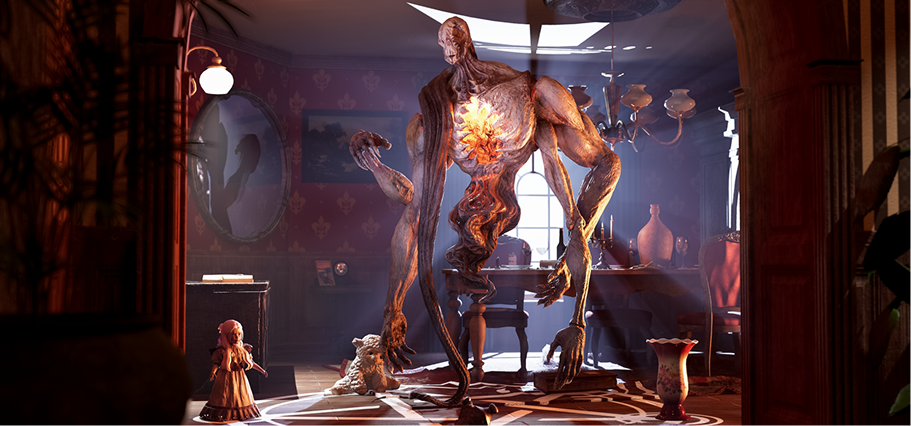
Demand Dial Exorcist
Game Overview
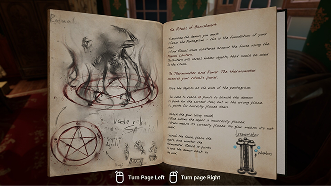
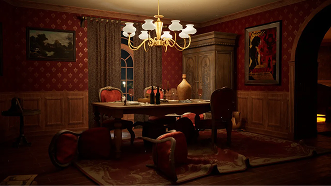
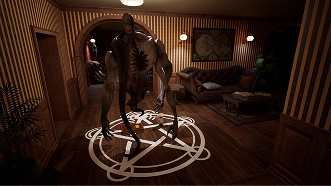
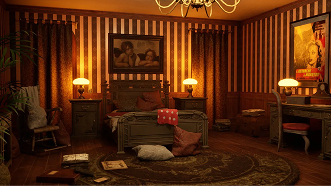
A first-person puzzle game where the player acts as an exorcist for hire, tasked with identifying the demon inhabiting a flat and performing the corresponding ritual to expel it. The core mechanic is adapted from the classic board game Mastermind — possessed objects placed on a pentagram yield score feedback, guiding deduction. Demon behaviours and the Exorcist's Book provide narrative-driven hints.
My Role:
Product Owner, Gameplay/Narrative Designer
- Created the project prototype in 3 days
- Coordinated and led the development process (team of 12)
- Designed and implemented the core gameplay loop (Mastermind-inspired puzzle)
- Designed distinguishable behaviour patterns for 13 demons and wrote their narrative descriptions
- Created and fully implemented a dynamic hint system
- Designed and implemented 10 in-engine demon behaviours using Blueprints
- Designed and implemented UI layout and logic
The Challenges
One of the key challenges was identifying what made our prototype fun. Through iterative analysis we realised our core loop resembled Mastermind — this discovery led us to refine it first as a paper prototype, then implement it in-engine. A second challenge was building a meaningful hint system: rather than static tooltips, hints emerge organically from demon behaviours that players cross-reference with the Exorcist's Book, making deduction feel immersive and rewarding.
Blueprints
Core Gameplay Loop — Mastermind inspired puzzle:
EXPAND ↓Data table with 13 demons, each with 4 special objects, 3 behaviours, and 3 narrative prompts stored as Blueprint Component references. On game start, a random demon is selected; its objects are stored in the player Blueprint; placement on pentagram triggers ritual power calculation.
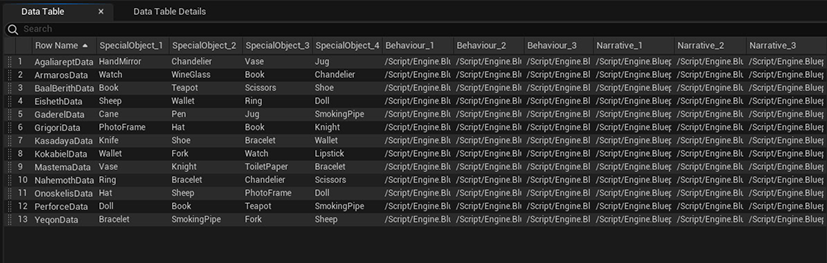
Right after the launch of the game, we get a random demon from the data table. We get his special objects into the player's blueprint and store there for reference:
We check the placement of the objects onto the pentagram, and if we have 5 objects placed, we calculate the ritual's power, and if we are in easy mode, create glow for the placed objects:
Hint System:
EXPAND ↓After each unsuccessful attempt to solve the ritual, we are launching one hint to appear. This is very customisable — the hints could be launched after several attempts, or depending on the player's hp:
Wicked Tales:
Blood Red Riding Hood
Game Overview
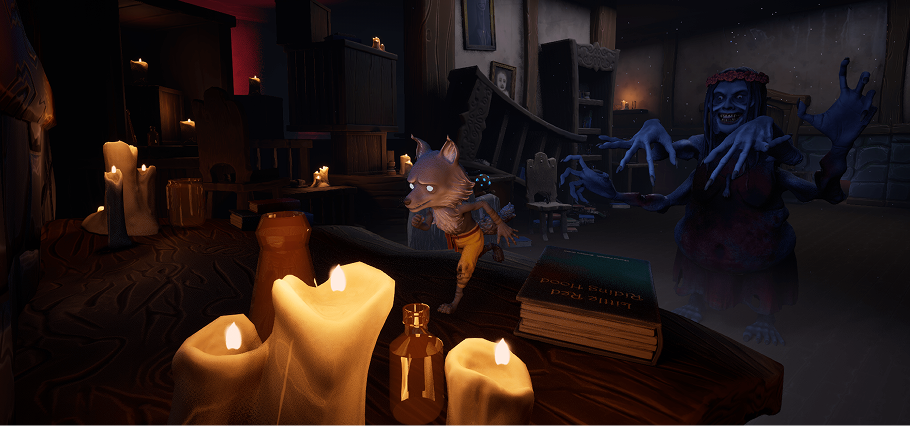
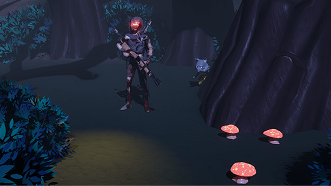
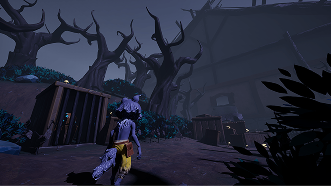
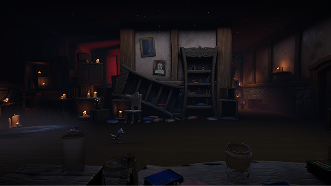
A 3D puzzle platformer where the player controls a young wolf navigating a dark forest and a witch's hut. Solve environmental puzzles, avoid enemies, and confront a final boss.
My Role:
Product Owner, Game & Level Design
- Coordinated and led the development process
- Designed layout and blockout for 2 full levels
- Designed 7 puzzles and coordinated their implementation
- Designed enemy AI behaviour patterns and implemented them using UE5 State Trees
- Designed and implemented the boss fight puzzle
The Challenges
Early levels felt repetitive — resolved by mixing strict 2D platforming with 3D sections and adding puzzle variety without new mechanics. Tutorial gap was addressed by introducing a friendly NPC (reskinned enemy) who teaches controls through in-world dialogue, reinforcing narrative. Final boss was scope-creeping — redesigned to use only existing mechanics and assets. Forest danger was emphasised through State Tree AI: slow but persistent enemy roaming that creates ambient tension.

Blueprints
Hunter AI patrolling using State Trees:
EXPAND ↓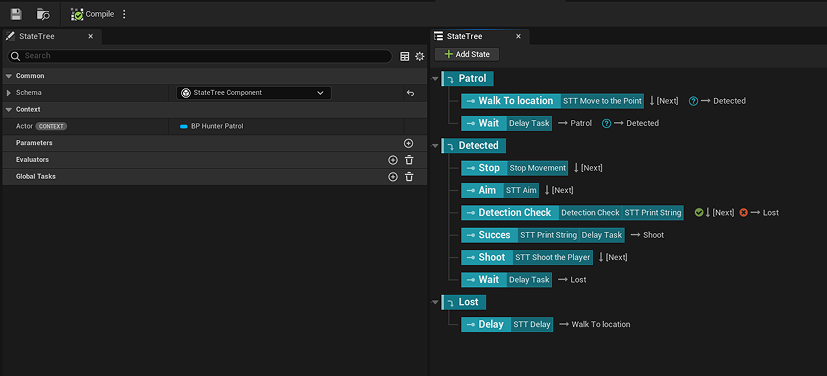
Final puzzle:
EXPAND ↓The goal of the final puzzle is to find 4 bottles on the map and drop them into the cauldron, while avoiding being caught by the witch. Every time a bottle is dropped, the cauldron must indicate that the player is a step closer to winning. If the player takes too long, the witch might stabilise the cauldron, and the player will need to drop additional bottles.
Mandragora
Game Overview
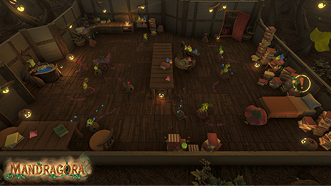
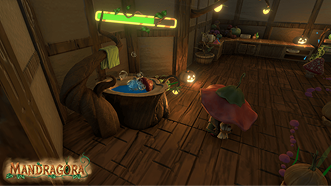
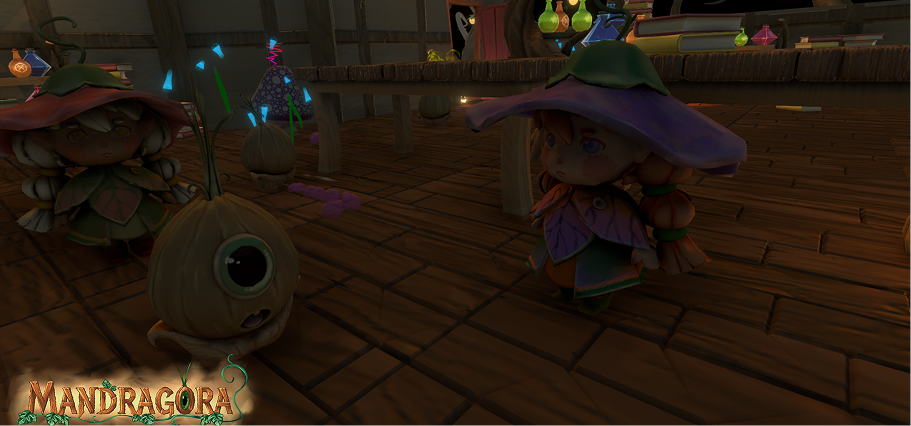
A co-op simulation game where players act as witches running a daycare for magical creatures. Tend to creature needs before they turn into monsters and cause chaos.
My Role:
Gameplay Designer, UX/UI Designer
- Liaison between artists and designers/product owner
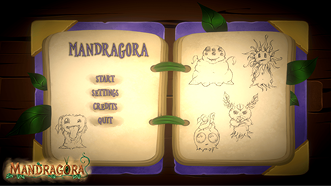
- Designed 5 creature types with distinct behaviour patterns (2 fully implemented)
- Co-designed level layout
- Designed UI layout and logic
The Challenges
First collaborative project — risk of scope creep managed by designing self-sufficient, incrementally implementable AI behaviours. Empty map space caused AI clustering and reduced player interaction; resolved by placing a barricade and a workstation to create meaningful encounter zones.